As an Amazon Associate, we earn from qualifying purchases. Some links on this site are affiliate links at no extra cost to you. Our recommendations are based on thorough research and editorial judgment.

How To Flatten Warped Book Pages?

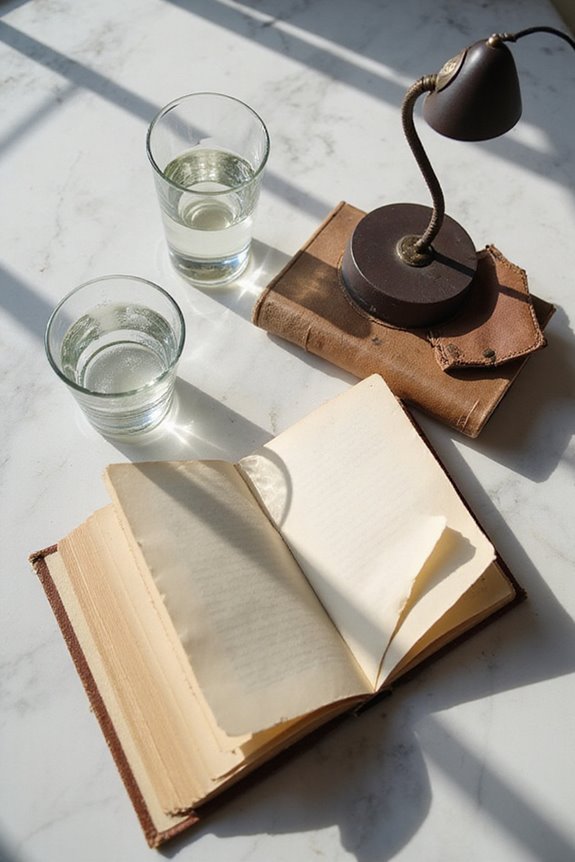
If we’ve got warped book pages, let’s tackle this together! First, we can create a clean workspace. Lightly mist the pages or use a damp sponge to introduce moisture. Then, interleave damp pages with absorbent materials and stand the book upright to dry. We want to avoid applying too much force to prevent damage. Remember, flattening is just a temporary fix. Want to make sure our efforts last? Stick around for more tips!
Key Takeaways
- Create a controlled environment by maintaining 55–70°F and 40–50% humidity to prevent further warping.
- Lightly mist warped pages or use a damp sponge to introduce moisture evenly.
- Interleave damp pages with absorbent materials like acid-free paper towels for consistent moisture distribution.
- Stand the book upright on absorbent towels while the pages dry to prevent further distortion.
- Monitor drying time and aim for under 72 hours to avoid mold growth and ensure effective flattening.
Understanding the Causes of Book Warping
You may be interested


While it might seem a bit mysterious why our favorite books sometimes look like they’ve been on a roller coaster, understanding the causes of book warping can really help. One major culprit is moisture imbalance; it happens when the binding adhesives release moisture unevenly. This uneven absorption can cause the pages and cover to expand or contract, leading to that frustrating warp. Additionally, material compatibility plays its part—using mismatched materials for covers and pages can create differing levels of stress, exacerbating the problem. To prevent warping, we should store our books in a stable environment, ideally between 55–70°F and 40–50% humidity. Remember, taking care of our books can keep them looking their best!
Evaluating the Value of Your Book
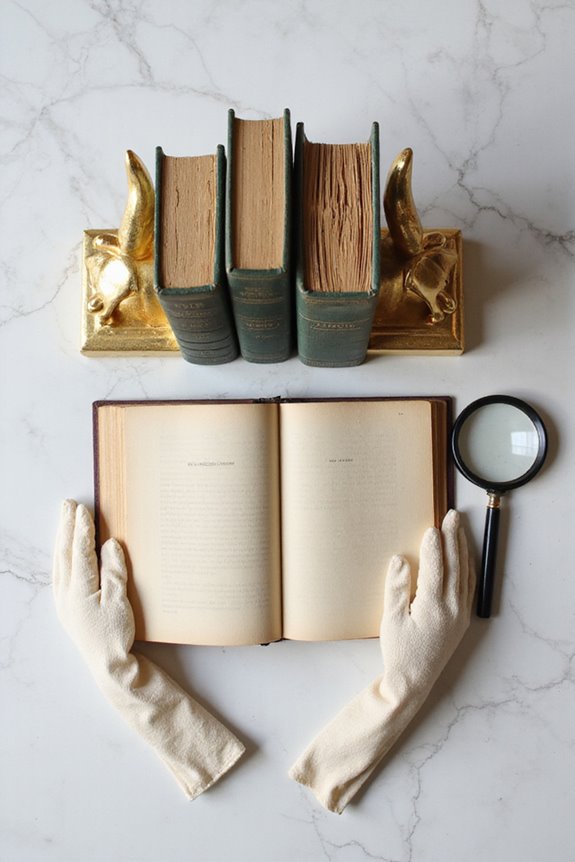
After understanding the causes of warping, it’s important to contemplate another aspect of preserving our books: evaluating their value. We should assess the book condition, as it directly influences resale value. For example, if a book is in excellent shape, it could fetch a higher price than one with visible wear. We recommend checking online marketplaces to see what similar titles are selling for. It’s also essential to take into account both the tangible assets, like first editions, and any intangible aspects, like author popularity. Keeping an updated record of our books’ value helps us make informed decisions when trading or selling. Remember, books are treasures; knowing their worth adds another layer of appreciation. Additionally, paper quality can significantly impact a book’s overall condition, making it crucial to consider when evaluating its value.
Preparation and Safety Measures
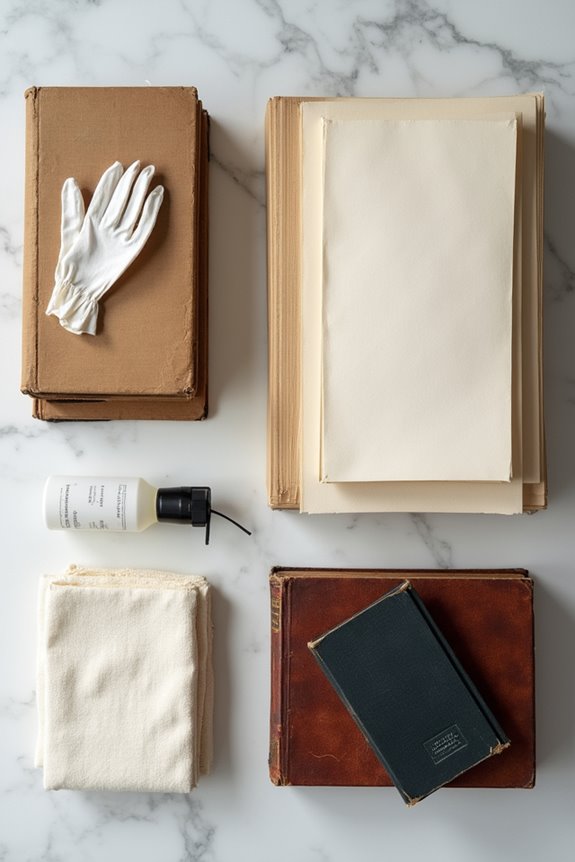
When we set out to flatten warped book pages, the first step is creating a well-prepared environment that makes the process smooth and safe. We need clean, dry workspace conditions, ideally with controlled humidity, to prevent mold or further warping. Let’s use plastic-covered tables to protect surfaces, and don’t forget to check that we have enough space for gentle handling techniques without forcing any pages.
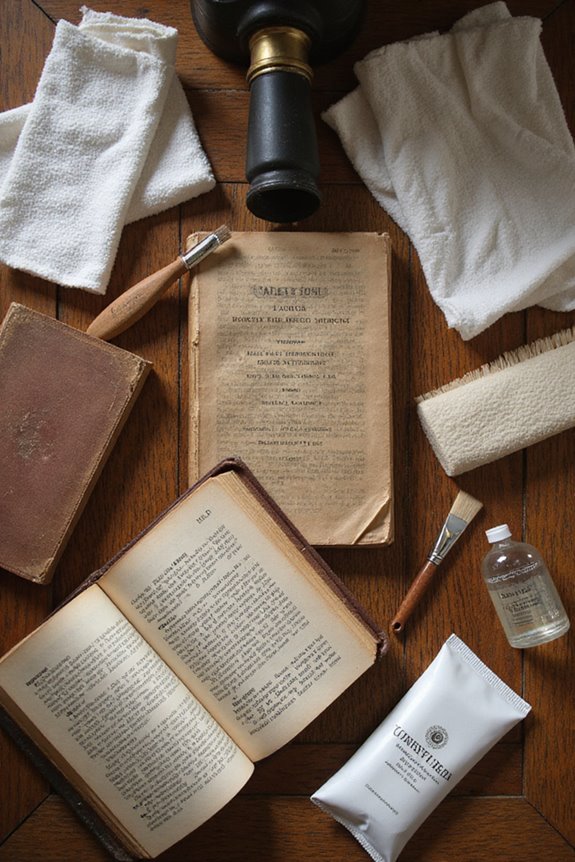
We should also have acid-free paper towels ready for interleaving and some weights or book presses that are padded. Plus, wearing gloves and masks is wise, especially if we suspect any mold. Remember, our goal is to treat the books with care, ensuring they stay in great shape while we work on them!
Moisture-Based Flattening Techniques
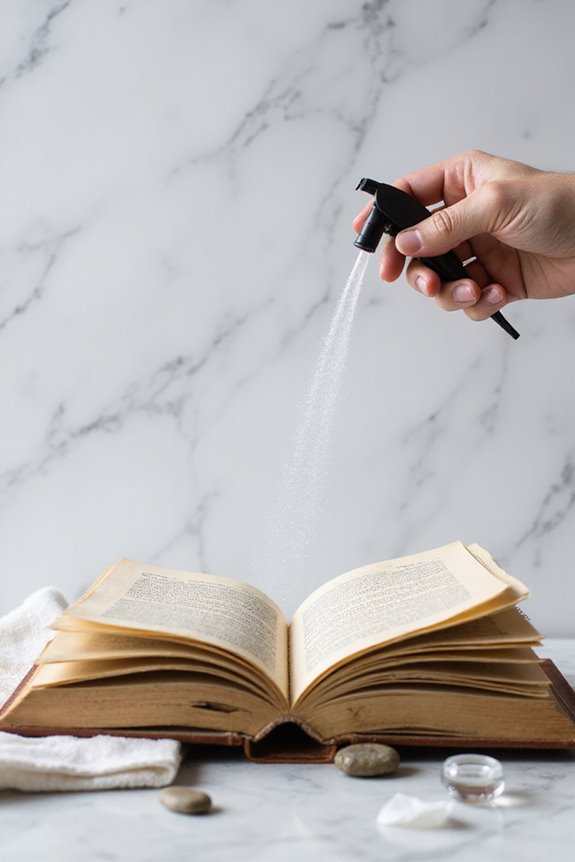
With our workspace prepped and ready, it’s crucial to tackle the art of flattening warped book pages using moisture-based techniques. First, we’ll carefully introduce moisture application by misting the pages lightly with a spray bottle, or we can use a damp sponge. Remember, we want the fibers to relax, not drown! Interleaving damp pages with absorbent materials, like paper towels, will help regulate moisture evenly. Let’s avoid forcing the book open too wide to prevent spine damage. As the pages dry, we’ll stand the book upright on absorbent towels, changing the interleaving materials regularly. It’s important to keep an eye on drying time—let’s aim for under 72 hours to sidestep any mold growth. Happy flattening!
Mechanical Flattening Methods
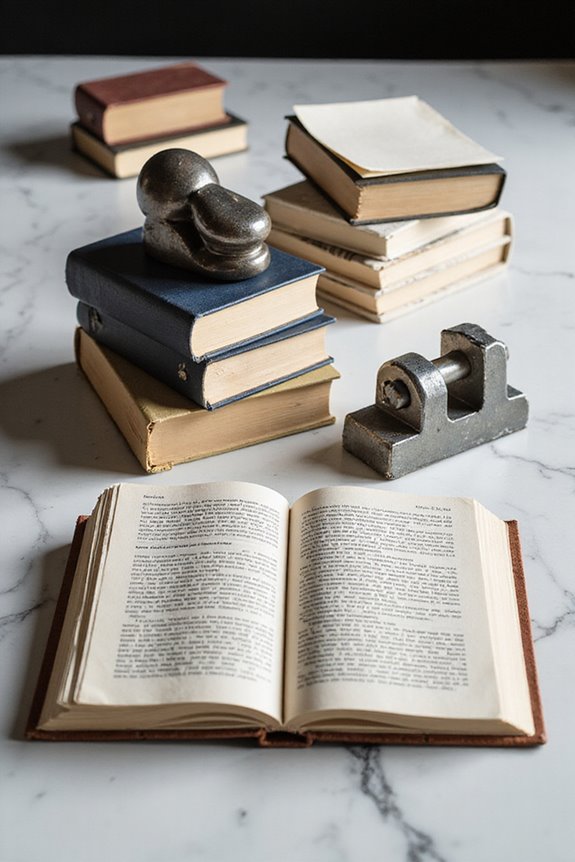
To successfully flatten warped book pages, we can use various mechanical methods that simplify the process while protecting the book’s integrity. One effective method involves using glass plates, which gently press down on open pages to smooth out curves without causing damage. For books that require extra care, adjustable cradles come in handy, allowing support without forcing a full 180° opening. Another great option is vacuum flattening, where suction devices keep pages flat during scanning, reducing manual pressure. We can also explore mechanical devices that utilize timing belts and servo motors for controlled page turning and flattening. These techniques not only improve imaging but also help maintain the book’s condition, making digitization smoother and more efficient.
Heat and Drying Strategies
Flattening warped book pages might seem like a challenging task, but it can be manageable if we apply the right heat and drying strategies. First, we should use low heat sources, like hair dryers on cool or low settings, to avoid damaging the pages. Applying heat indirectly while maintaining a safe distance helps prevent scorching. To really speed things up, combining this heat with good air circulation is key—fans positioned parallel to the book surfaces can do wonders.
While keeping our drying area clean, we can lay absorbent materials between pages to soak up excess moisture. Remember, we want those pages warm but not hot, ideally around 50° to 65°F. Let’s keep those books safe and sound!
Limitations and Considerations
While we may wish for a magic solution to fix warped book pages, it’s essential to recognize the limitations and considerations that come into play during the flattening process. Some flattening challenges stem from the paper type; thin or decorative pages may tear under pressure. Plus, binding structures can limit effective flattening, especially in rare books. We should also be aware of preservation risks—moisture can lead to mold, and excessive force might damage fragile pages or worsen existing creases. Remember, flattening is a temporary fix; if environmental conditions aren’t controlled, re-warping is likely. Ultimately, always approach flattening with care, as improper methods can cause irreversible harm to your cherished pages.
When to Seek Professional Help
If you notice that a book’s pages are severely warped, it might be time to contemplate getting professional help. We should consider calling in professional conservators when DIY methods won’t cut it, especially for valuable or antique books. If we spot mold or extensive damage, let’s avoid the temptation to fix it ourselves. Employing advanced conservation techniques, these experts can safely restore our books without causing further harm. They’ll use specialized equipment to prevent damage and tailor their approach based on our books’ needs. Remember, when complex bindings are an issue or if ink is bleeding, it’s smart to consult a conservator first. Trust us, it’s worth it to keep our beloved books in top shape!
Recommended Products


Archival material created and made in USA. Lineco is a leading and trusted brand for archival quality art, photography, and framing supplies

Can I Use an Iron to Flatten Warped Pages?
We can use an iron to flatten warped pages, but we should stick to a low temperature and avoid steam settings. This guarantees we don’t damage the paper while attempting to restore its shape.
How Long Does the Flattening Process Usually Take?
When we consider flattening techniques, the time varies markedly. Manual drying methods can take hours to days, while digital processing is nearly instantaneous, allowing us to view results immediately after scanning without delays.
Is It Safe to Use My Microwave for Drying?
We shouldn’t use the microwave for drying our books due to serious safety risks. Instead, let’s explore safer drying methods that protect our pages and preserve their condition without the dangers microwaving poses.
What Types of Books Are Most Prone to Warping?
Remember that old hardcover book with vintage editions? Its warped pages remind us that moisture absorption impacts paper quality. Generally, thicker covers and glossy finishes are most susceptible, leading to unwanted bending and curling.
Will Flattening Damage My Book’S Illustrations or Photographs?
We recognize your concern about flattening possibly damaging your book’s illustrations or photographs. Prioritizing illustration preservation and photograph care, we recommend gentle methods that avoid heat and moisture to safeguard these delicate images.