As an Amazon Associate, we earn from qualifying purchases. Some links on this site are affiliate links at no extra cost to you. Our recommendations are based on thorough research and editorial judgment.


What’s The Best Bitrate For Streaming Music At Work?

When we’re streaming music at work, aiming for around 192 kbps is a solid choice. This bitrate gives us a good balance between sound quality and keeping our network running smoothly. If the office gets noisy, bumping it up to 256 kbps can help with clarity. However, anything beyond that may not improve sound enough to notice with standard gear. Stick around, and we’ll explore more tips to enhance your workplace music experience!
Key Takeaways
- A bitrate of 160 kbps to 256 kbps is ideal for balancing audio quality and bandwidth while streaming at work.
- For clear speech in podcasts and audiobooks, use 128 kbps to 192 kbps to minimize data usage.
- In crowded office networks, lower bitrates of 96 kbps to 128 kbps can help avoid buffering issues.
- Testing your upload speed is crucial; it should be 1.5 to 2 times your chosen bitrate for smooth playback.
- Adaptive bitrate protocols can adjust quality based on available bandwidth, ensuring uninterrupted streaming.
Understanding Bitrate in Music Streaming
You may be interested



When we plunge into music streaming, the term “bitrate” pops up often, but what does it really mean for our listening experience? Fundamentally, bitrate measures how much audio data gets processed per second, usually noted in kilobits per second (kbps). Higher bitrates, like 320 kbps, deliver richer sound by capturing more details, while lower bitrates, around 128 kbps, might leave us feeling underwhelmed. As we explore bitrate adjustments, it’s essential to remember that these can impact file size and audio compression. The right choice can enhance our listening without maxing out our storage or bandwidth. So, whether we’re jamming to a complex symphony or a simple tune, understanding bitrate is vital for enjoying our favorite tracks to the fullest!
Recommended Bitrates for Different Streaming Scenarios
Understanding how bitrate influences our music streaming experience is key when we consider different scenarios. For most of us in a typical workplace with stable internet, streaming at 160 kbps to 256 kbps strikes a great balance between quality and bandwidth consumption. If you’re listening to podcasts or audiobooks, 128 kbps to 192 kbps will deliver clear speech without hogging data. In crowded office networks, opting for 96 kbps to 128 kbps guarantees smooth playback while avoiding buffering. And if you’re in a restricted environment, streaming down to 56 kbps to 96 kbps helps keep the network flowing. Ultimately, it’s all about finding what works best for our streaming preferences while accommodating our workplace acoustics!
The Relationship Between Bitrate and Audio Quality
Bitrate plays a crucial role in shaping our audio experience, so it’s essential to grasp how it impacts quality. Higher audio bitrates, expressed in kbps, allow us to capture more audio nuances, resulting in clearer and richer sound. However, when we use bitrate compression, lowering the bitrate can introduce artifacts, turning complex musical passages into muddled noise. Most of us find that bitrates around 256 to 320 kbps work best, as they strike a balance—great quality without overwhelming file sizes. Although different codecs handle these bitrates differently, we can often hear the improvement with efficient formats like AAC. So, when streaming, let’s remember that our chosen bitrate can greatly influence our listening pleasure and that every detail matters!
Recommended Products

High sound quality LDAC decoding: The Bluetooth audio adapter features the LDAC audio codec, audio sampling rates up to 24bit/96KHz, delivering uncompromised high-definition...
Bitrate and Streaming Stability: Avoiding Buffering
Choosing the right bitrate is only part of the equation when it comes to enjoying smooth music streaming. To avoid buffering, we need to take into account our upload speed; ideally, it should be 1.5 to 2 times our chosen bitrate. Network fluctuations can really affect stream stability – think of how sharing the network with coworkers can sometimes slow things down. We recommend using Constant Bitrate (CBR) for a steady audio flow, especially during work hours. Streaming protocols like adaptive bitrate play an essential role too, adjusting quality on the fly to match available bandwidth. Finally, it’s smart to test our upload speed before diving into a streaming session to make sure we’re all set for uninterrupted tunes. Happy listening!
Optimal Bitrate Settings for Workplace Listening
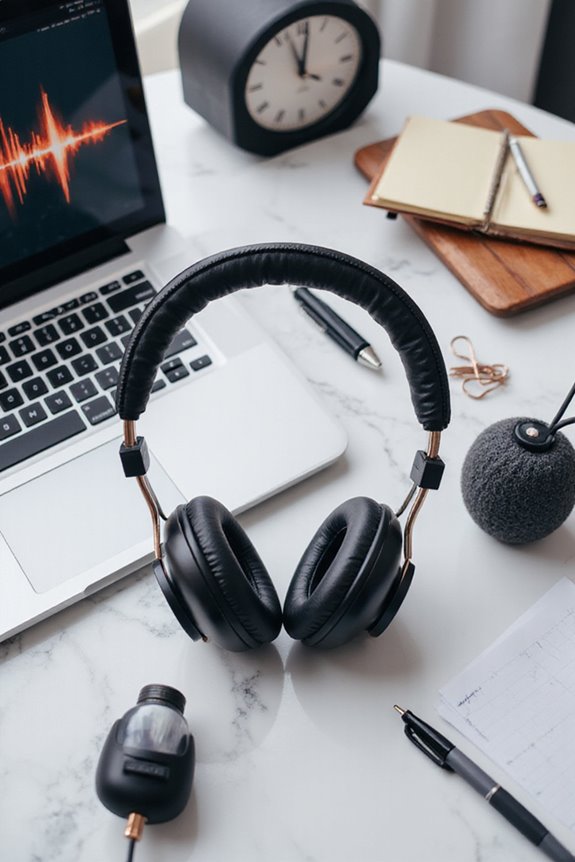
While we might love cranking up the volume on our favorite tunes during lunch breaks, getting the ideal bitrate for workplace listening is essential to keep our music experience enjoyable without hogging the company bandwidth. For most office acoustics, bitrates around 192 kbps offer a great balance of sound quality and bandwidth usage, perfect for non-specialized setups like earbuds or standard speakers. If we’re in a noisier environment, bumping it up to 256 kbps can help maintain clarity. However, going beyond 256 kbps might not be worth it, since our gear won’t fully capture those details. So, let’s tailor our listening experience to our listener preferences while ensuring we stay mindful of our office network’s capacity.
Recommended Products

EASY BLUETOOTH CONNECTIVITY - The latest Qualcomm 5100 series Bluetooth (only input) DAC supports Bluetooth 5.1 in all current and future formats such as AAC, aptX, aptX HD,...
Technical Considerations for Choosing Bitrate
When it comes to selecting the right bitrate for streaming music, one can’t overlook the technical factors that play a significant role in the overall listening experience. We need to take into account factors like bitrate encoding and audio compression. Different audio formats, such as MP3 and WAV, require varying bitrates for ideal quality. For example, while WAV keeps that high quality with no compression, MP3 offers compressions ranging from 96 kbps to 320 kbps. Plus, our available bandwidth must align with the selected bitrate to prevent annoying buffering. We should always reserve an extra 20-30% of our bandwidth. Finally, let’s keep in mind that high resolutions are best for high-quality speakers, but may be overkill for those little earbuds we all use.
Recommended Products
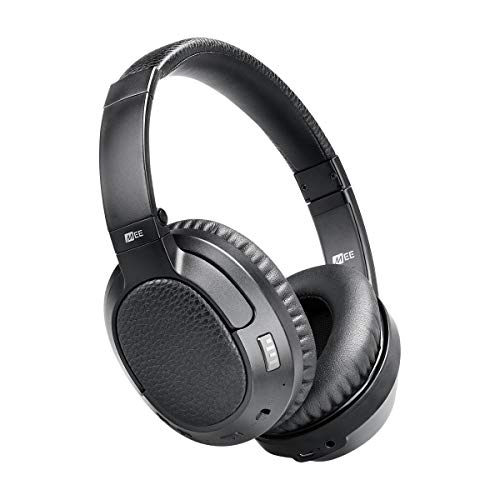
CINEMA FOR ONE -Designed for all types of media, 4th-generation Matrix headphones combine low latency technology with CinemaEAR audio enhancement to eliminate lip-syncing issues and provide the best possible audio performance not just for music, but also for movies and TV shows

CINEMA FOR ONE: The Cinema 3D combines a user-friendly design with advanced tech, making it easy for anyone to enjoy TV with headphones while providing power users additional control and flexibility. Its wireless charging pad removes the hassle of plugging in cables, while the touch panel allows for volume and playback control with intuitive gestures - especially helpful for users with limited mobility.
Practical Tips for Streaming Music at Work
To get the most out of streaming music at work, it’s essential that we think about our environment and employee preferences. First, let’s curate playlists that reflect our company culture—avoiding repeat tracks to keep things fresh and fun. Think about music collaboration with our team; creating a shared playlist can make everyone feel included and valued. It’s also important to use suitable streaming services, ensuring we avoid copyright issues. Let’s keep the volume low enough for conversation, but just high enough to enhance focus. By rotating playlists and blending various genres, we can maintain playlist diversity, boosting mood and productivity. If someone prefers personal tunes, let’s embrace headphones as an option—everyone wins!
Can Bitrate Affect Battery Life on Mobile Devices?
As we enjoy our favorite tunes on the go, we’ve gotta remember that bitrate can greatly impact battery consumption in mobile streaming. Choosing the right settings helps us extend our listening pleasure without frequent recharges.
What Is the Effect of Bitrate on Loudness Levels?
Bitrate perception plays an essential role in how we experience loudness. While loudness normalization helps standardize playback levels, higher bitrates maintain audio quality, enriching our listening experience and ensuring the music sounds its best.
Does Bitrate Change With Live Streaming Events?
When it comes to live streaming, we’ve got to remember that bitrate is like the lifeblood of event quality—higher bitrates guarantee crystal-clear audio and video, elevating our viewing experience to exhilarating new heights!
Are There Legal Implications to Streaming High-Bitrate Music at Work?
When we consider streaming high-bitrate music at work, we mustn’t overlook the essential streaming licenses and copyright regulations. It’s vital to guarantee compliance or risk potential legal challenges and repercussions down the line.
How Do I Check My Current Bitrate While Streaming?
To check our current bitrate while streaming, we can use various streaming tools. By accessing playback settings or enabling advanced stats, we can easily conduct bitrate analysis to find precise information on our streaming quality.